Parent Guide
What Is Selective Mutism?
A clear, parent-to-parent explanation of what selective mutism is, what selective mutism symptoms often look like, and what usually helps next.
If you just landed here after reading another page and thought, "Oh. This might be my child," I know that feeling. Having a name for what you're seeing can be a relief. It can also feel like a lot all at once.
You may be worried. You may also feel strangely calmer because the pattern finally makes sense. Both reactions are normal.
What It Is
Selective mutism is an anxiety disorder. It is not shyness, not stubbornness, and not bad parenting.
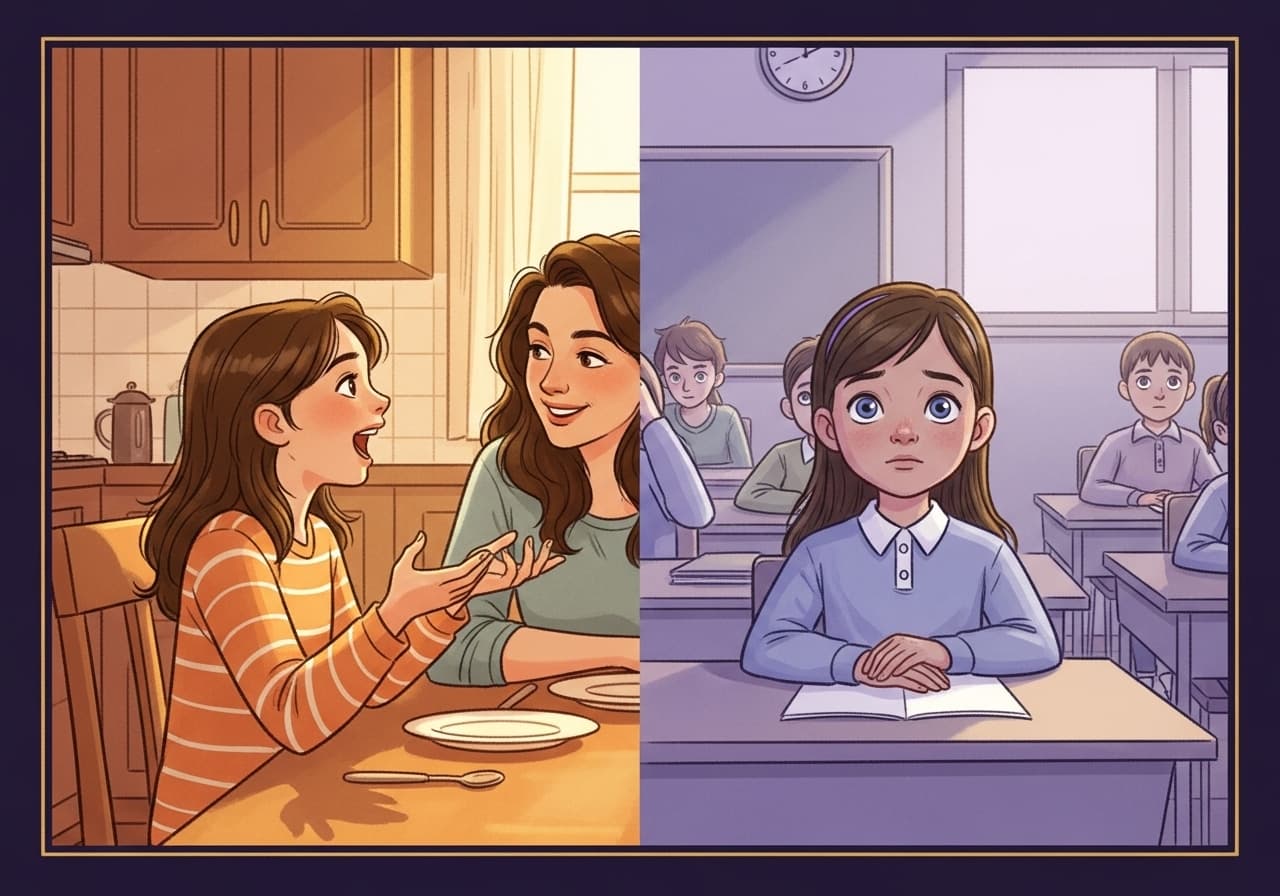
A child with SM usually speaks freely and normally at home or in comfortable settings. But in other settings like school, public places, or around extended family, they go silent or near-silent in a way that is consistent and hard to break through.
That silence is not a choice. It is the anxiety response, and it is involuntary. Research on selective mutism goes back more than 30 years, so this is not rare or mysterious. It is more common than most parents realize, and it is well understood.
What It Is Not
- Not shyness they'll grow out of
- Not defiance or bad behavior
- Not a sign of trauma, though trauma can co-occur
- Not caused by bad parenting
- Not a sign the child is unhappy at home
- Not selective in the sense that the child is choosing when to speak
What It Looks Like
What parents usually see is a child who speaks normally at home but goes silent at school. Or a child who can chat in the car and at the dinner table, then freezes the moment an unfamiliar adult speaks directly to them.
Some children whisper. Some point, nod, or gesture instead of using words. Some look physically different in trigger settings: stiff body, blank expression, little eye contact, almost like the brave voice disappears the second the pressure shows up.
Teachers sometimes describe these kids as "so well-behaved." I always want parents to hear that as a warning sign, not a compliment, if what it really means is the child is silent and never asks for help. Many families also hear a pediatrician say it's probably "just shy," especially early on.
If you've been searching things like selective mutism vs shyness or why won't my child talk at school, this is usually the pattern behind that question.
Why It Happens
SM is rooted in anxiety. In plain language, the child's brain is reading some settings as socially unsafe even when the adults around them know they are safe.
Their speaking ability is intact. Nothing is wrong with the child's language system. The brave voice is already in there. Anxiety is blocking access to it in certain contexts.
It often runs in families alongside other anxiety patterns. That does not mean you caused it. It means your child may be wired toward a stronger freeze response in social situations.
What Helps
What helps is gradual, low-pressure exposure. Not pushing for speech. Not trying to force a breakthrough. The goal is to slowly expand the settings where speaking feels safe.
Pressure usually makes SM worse. Calm repetition, tiny brave moments, and predictable practice help the nervous system learn that these moments can be safe.
Video self-modeling is one evidence-based tool, with research going back to the 1990s. Earlier support is better, but it is never too late. If you're wondering where to begin, the best next step is usually to get a clearer picture of your child's starting point.
If this is your child, take a breath. This is hard, but it is not hopeless. You do not need to know everything today. You just need a good next step.
Start Here — Free
Try the Voice Map
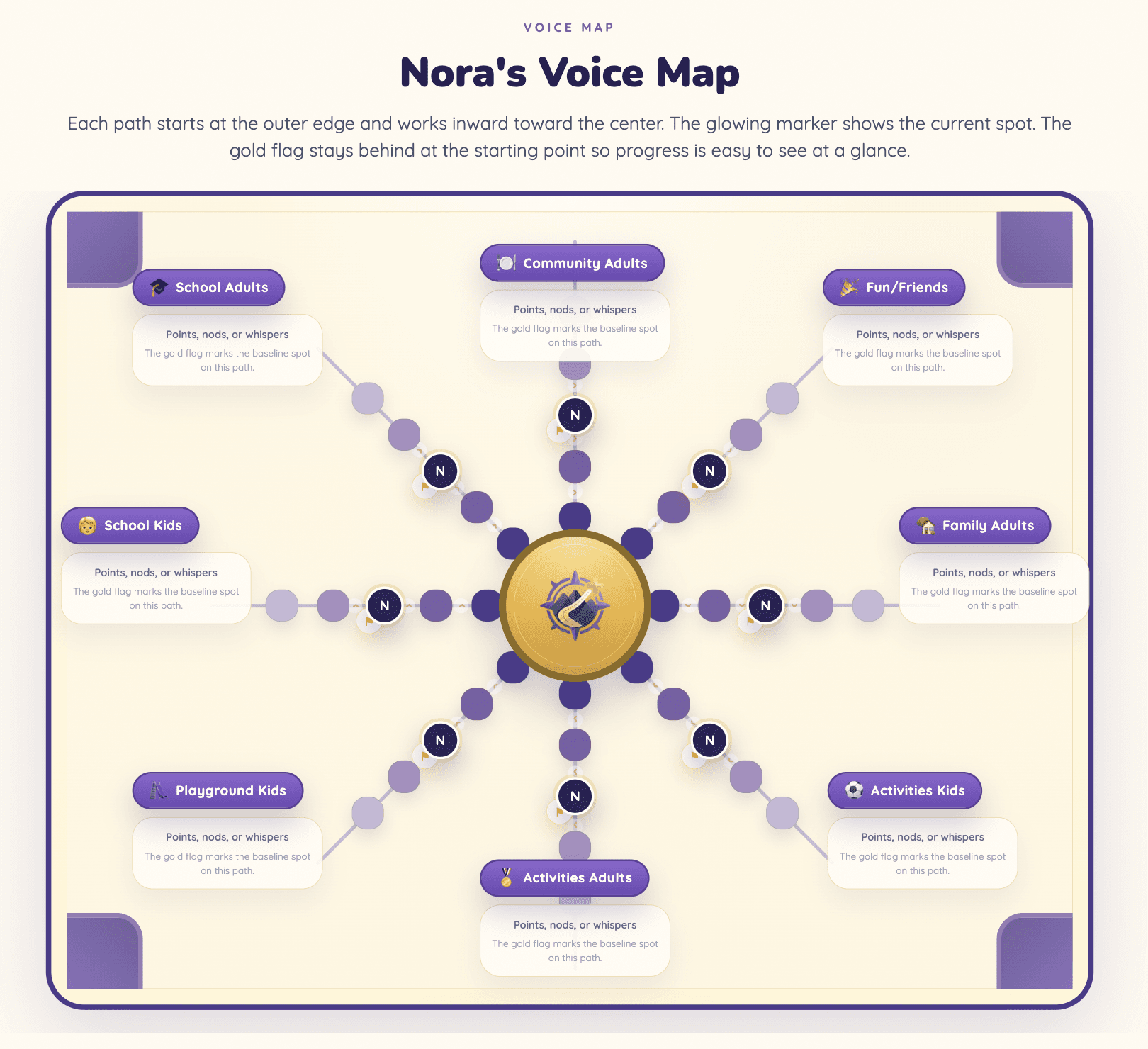
If you're not sure where to begin, begin here. The Voice Map helps parents see where speaking feels easiest, where it gets hard, and which moments are the best place to start. In about 5 minutes, you'll get a clear picture of where your child is right now — and turn "I'm worried something is going on" into a clear next step.
Free to start. Save your child's map and track progress over time.