

If you're reading this, I'd bet you've had at least one moment in the last few weeks where you thought: "What is going on with my kid?"
They come home from school and chatter a mile a minute about what so-and-so said at lunch. They sing in the bathtub. They negotiate dessert like a small lawyer. But the second they walk into that classroom, it's like someone hits a mute button.
You're not imagining it. And you're not the only parent dealing with this — not by a long shot.
I'm Bob. My daughter did exactly this for years. We figured out what was actually happening, what helped, and — just as importantly — what made it worse. I built BraveVoiceJourney to share what we learned with parents who are right where we were.
This is more common than most people realize, and there's a name for it. We'll get there in a minute. First, let's talk about what's actually going on.
If the child you're worrying about is still in preschool, we also put together a preschool-specific guide on what it can mean when a preschooler won't talk at school.
What's Actually Happening When Your Child Won't Talk at School
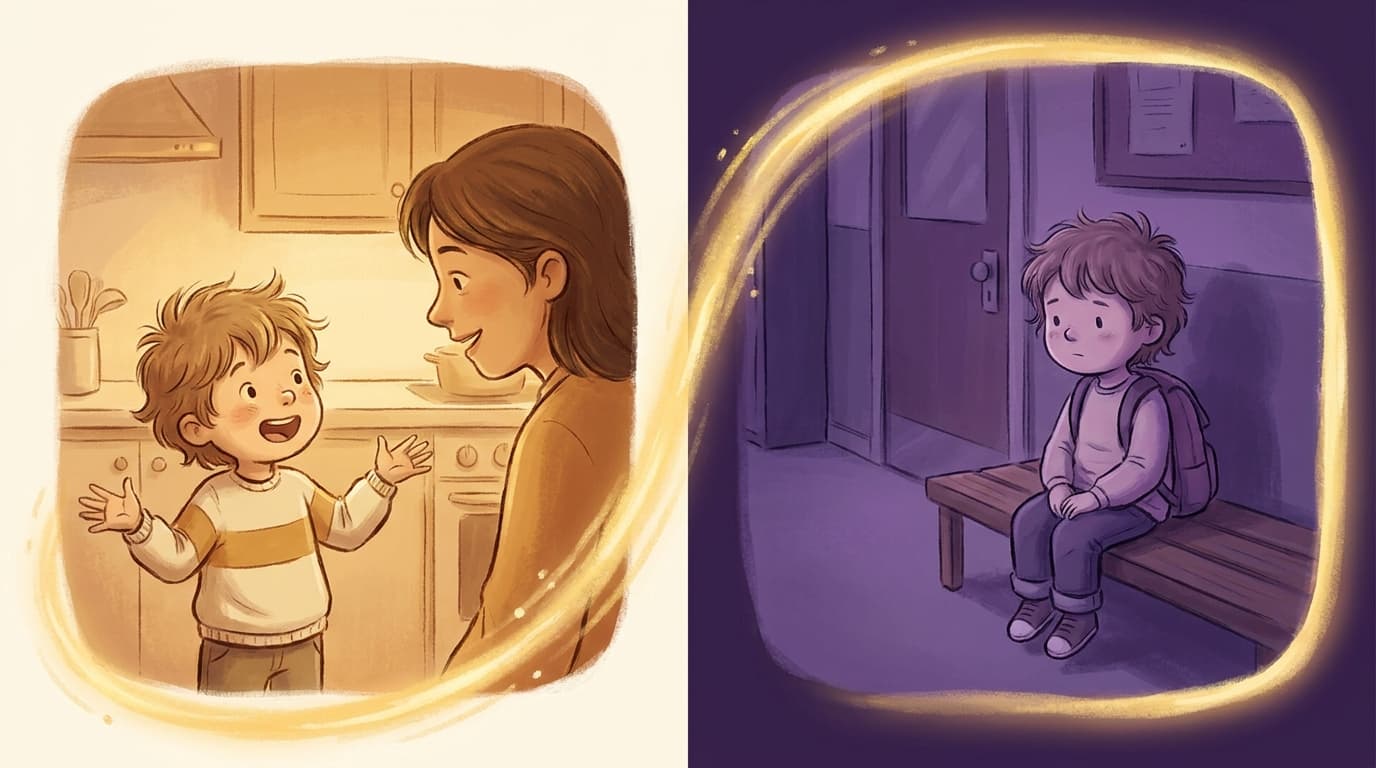
When a child can talk freely in one setting (home, with you) but goes completely silent in another (school, sometimes even with grandparents or in public), it's almost never about being stubborn, rude, or "going through a phase." And it's usually not just shyness either, even if it looks that way from the outside.
What's typically happening is anxiety. Not the deadline-stress kind adults experience — a more primal version. The child's nervous system perceives a specific setting as unsafe in a very particular way, and the part of them that produces speech essentially goes offline.
It's not a choice. They're not refusing. They're frozen.
The clinical term for the more pronounced version of this is selective mutism — and the name is genuinely misleading. Your child isn't "selecting" anything. The mutism is selective in where it shows up, not in any willful sense. They can't just decide to talk any more than you can decide to stop blushing.
But before we go further: not every quiet kid has selective mutism, and not every kid who's struggling needs the same kind of support. Let's look at the signs that tend to separate "wait it out" from "this needs attention."
Signs It Might Be More Than Shyness
A child whose silence is anxiety-driven (not just temperament) usually shows several of these patterns. If three or more of these ring true, you're probably not dealing with regular shyness:
- It's setting-specific and consistent. Almost always school, sometimes also extended family or public places like restaurants. It's not just a bad day or a new environment they haven't warmed up to yet.
- They're chatty and expressive at home — often more than other kids their age. The contrast is dramatic.
- It's been going on for more than a month after they've had time to get used to the setting and the people in it.
- They use non-verbal workarounds at school: pointing, nodding, gestures, sometimes whispering only to one trusted friend.
- They might look physically frozen — wide-eyed, stiff, struggling with eye contact, almost statue-like.
- It's affecting how they function: they can't ask for help, can't ask to use the bathroom, can't make friends easily, can't participate in classroom activities.
- Their teacher describes them as "the quiet one" or "so well-behaved" — and may not realize the silence is a struggle, not a personality trait.
If you're nodding through that list, you're probably looking at something more than shyness. The good news: there's a clear path forward, and the earlier you start, the smoother the road tends to be.
You might be wondering whether what you're seeing is selective mutism, social anxiety, or just an introverted kid. We dig into that question on our hub page: is my child just shy or something more.
What Helps (and What Makes It Worse)
This is the part I wish someone had handed me on day one. A lot of the things that feel helpful in the moment actually deepen the silence. And a lot of what works feels counterintuitive.
What makes it worse
Even when it feels right
- • Pressuring them to "just say hi" or "use your words." This raises anxiety, which is the exact thing freezing them up.
- • Bribing or rewarding them for speaking. Now speech has stakes. Stakes increase pressure. Pressure increases freezing.
- • Making a huge deal when they do speak. ("She talked! Did you hear her??") Suddenly all eyes are on them — terrifying.
- • Comparing them to other kids. ("Look how nicely Sophie says hello.") This adds shame on top of anxiety.
- • Speaking for them in every moment they freeze. Tempting, but it teaches them that silence works.
- • Calling them shy — especially in front of them. Labels stick. They start to believe "shy" is who they are, not something they're working through.
- • Punishing or shaming them around it. Never works. Always backfires.
What actually helps
The lower-pressure path
- • Take the pressure off speech. Your job in hard moments is to lower their anxiety, not to extract words. Words come back when the nervous system feels safe.
- • Praise the bravery underneath, not the words. "You walked right up to the counter. That's huge." That's the real win.
- • Let them communicate however they can. Pointing, whispering to you, nodding, drawing. Build the bridge first; full sentences come later.
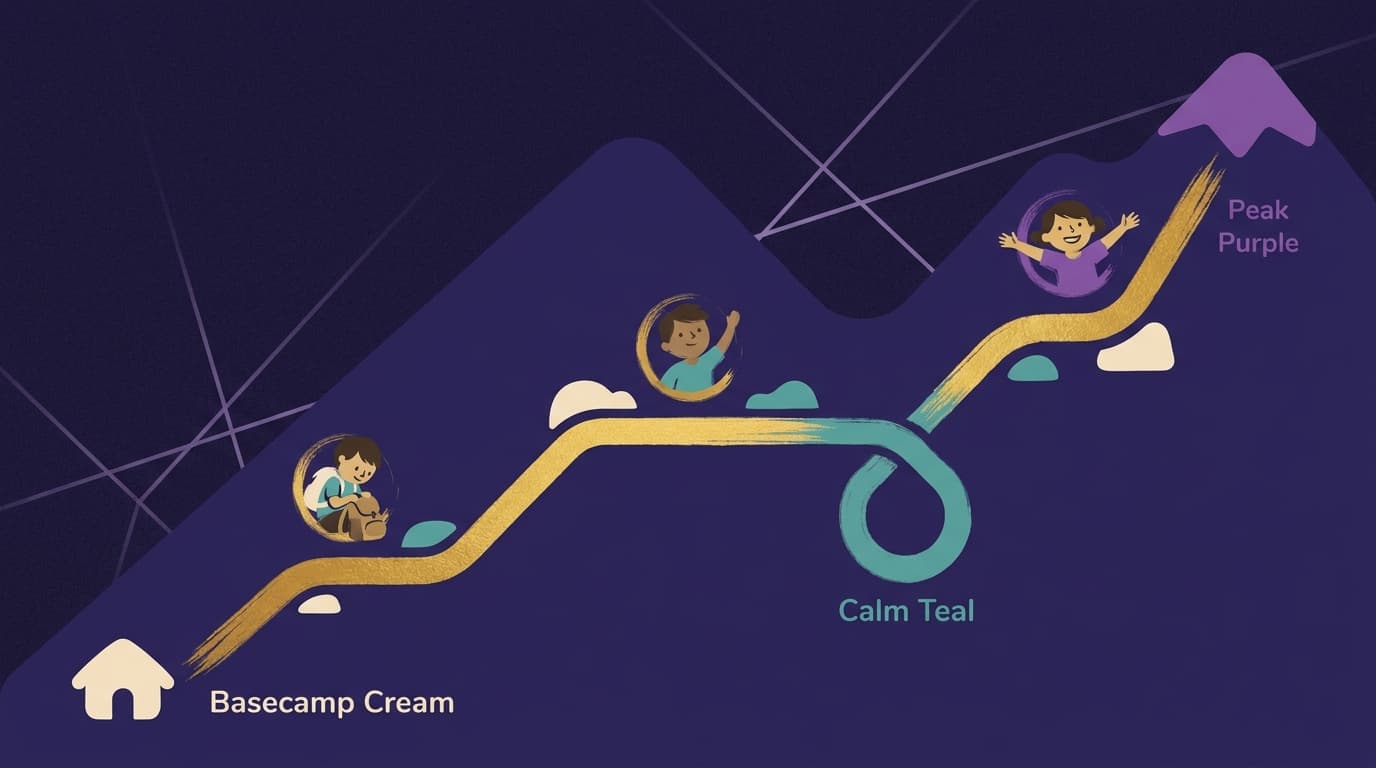
- • Use a "talking ladder." Start in settings where they can speak, then take small, gentle steps toward the harder ones. Talking to grandma on a video call → talking to grandma in the kitchen → ordering ice cream when only family is in earshot. Each rung lower-stakes than the next.
- • Loop in their teacher early. Most teachers want to help; they just don't know what's actually going on. Share what you see at home so they understand the silence isn't "good behavior" — it's a struggle.
- • Get a real evaluation if it's been more than a couple of months. A speech-language pathologist or child psychologist who specializes in selective mutism is the gold standard.
- • Trust the long arc. Almost every child who gets the right support eventually finds their voice. My daughter did. Yours can too.
Start Here — Free
Try the Voice Map
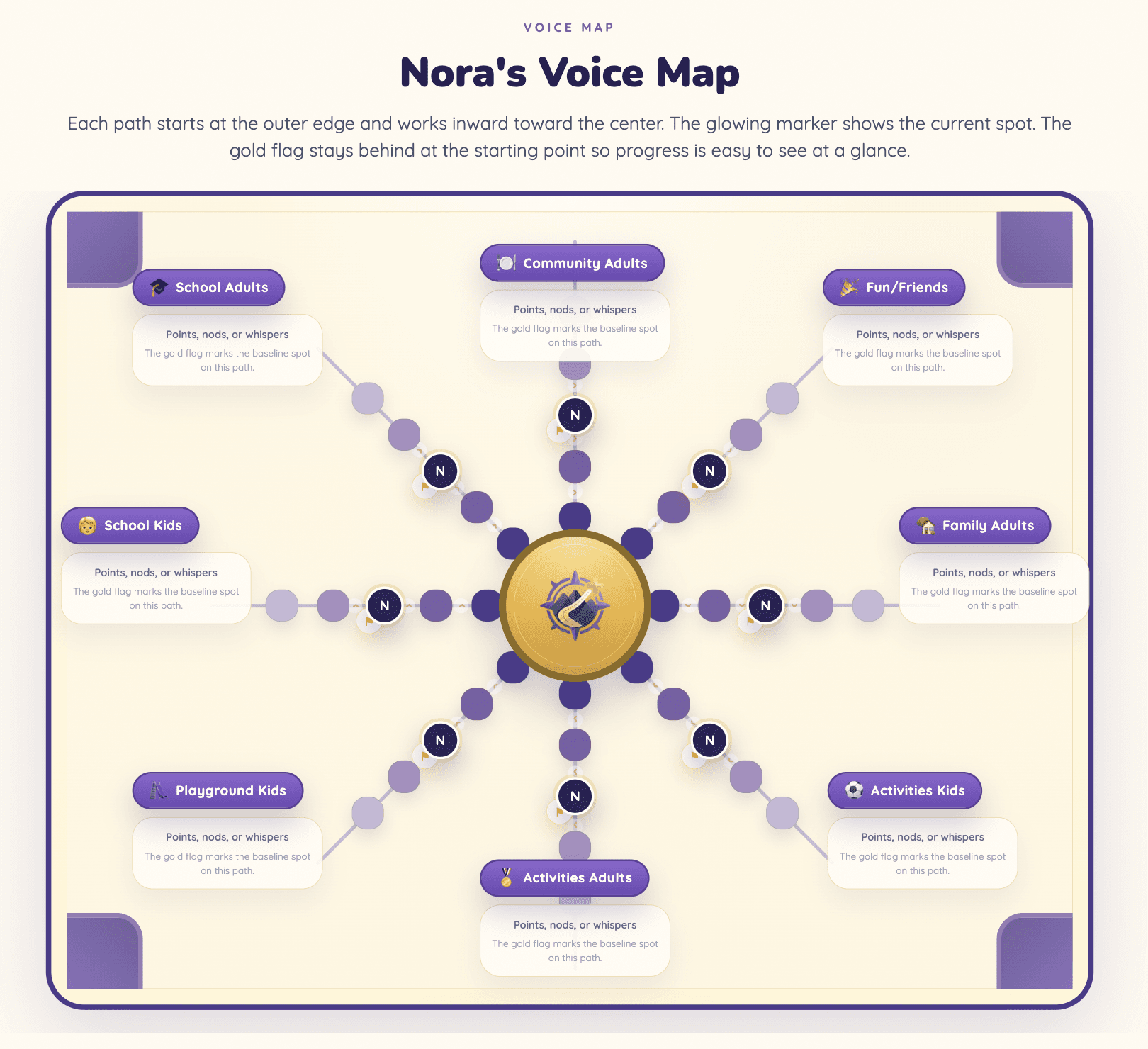
If you're not sure where to begin, begin here. The Voice Map helps parents see where speaking feels easiest, where it gets hard, and which moments are the best place to start. In about 5 minutes, you'll get a clear picture of where your child is right now — and turn "I'm worried something is going on" into a clear next step.
Free to start. Save your child's map and track progress over time.
A Quick Story From Our House
Here's the moment it stopped being a "huh, that's strange" thing for us and became a "we have to figure this out" thing.
Our daughter was in her second year of preschool. My wife and I got pulled in for a parent-teacher conference — the kind where the teachers are using that careful, gentle voice that immediately tells you something is up. They told us, as kindly as they could, that our daughter had not spoken a single word — to a single child, to a single teacher — in the three months she'd been back at school.
Three months.
I sat there blinking at them like they were describing somebody else's kid. Because the kid we live with? She talks non-stop. To us. To her sister. In the bathtub. In the back seat. She had been chattering in the car on the way to drop-off that very morning. She'd be chattering again on the ride home that afternoon. There is, apparently, a six-foot zone somewhere between the parking lot and the classroom door where the words stopped.
We had never heard of selective mutism. We thought she was shy. Maybe a slow warmer, a little quiet for her age. We did not think she was silent in the literal, hasn't-spoken-since-September sense.
"What worries us most is that if she needs something — if she gets hurt, has an accident, or just needs help — she can't tell us."
That was the moment. Up until then, the silence had felt like a personality quirk we assumed she'd grow out of. The second a teacher said the words "if she gets hurt," the whole thing reframed. This wasn't shy. This was a kid who couldn't access her own voice in a place where she might really need to.
We went home and started Googling. About ninety seconds in I realized: oh. This is a real thing. This has a name. And we are very much not the first parents to be sitting at a kitchen table at 9pm wondering what we just learned about our kid.
That parent-teacher conference is the reason BraveVoiceJourney exists. If you've just had a similar conversation — or you're worried you're about to — you're in the right place. If you want more of our family's story, we wrote that out too.
What to Do This Week
If you've read this far, you're probably ready to do something — not next month, this week. Three small steps that don't require a diagnosis:

- 1. Stop saying "shy." Replace it with "still warming up" or just stop labeling it altogether. Tonight.
- 2. Send a short note to their teacher. Something like: "I wanted to share that [child's name] talks easily at home but tends to freeze up when speaking is expected. We're working on it. The most helpful thing is to take pressure off speaking, give them time, and let them communicate however they can — pointing, nodding, whispering to a friend. I'd love to compare notes on what you're seeing."
- 3. Watch, don't push. For the next week, just observe. When does the silence get heavier? When does it ease? You'll learn more from a week of patient observation than from a month of trying to "fix" it.
Frequently Asked Questions
Is it normal for a 4 or 5 year old to talk at home but not at school?
It's common — especially in the first few weeks of preschool or kindergarten. But if it's been going on for more than 4–6 weeks past the initial adjustment, it's worth paying attention to. The 3–6 age range is when this pattern most often becomes noticeable, usually right around the start of school.
How is this different from just being shy?
A shy child usually warms up over time and engages eventually, even if quietly. A child whose silence is rooted in anxiety stays consistently silent in the trigger setting — often for months, even after they're fully familiar with the people and place. The contrast between how talkative they are at home and how silent they are elsewhere is also much more dramatic than typical shyness.
Should I push my child to talk?
No. Pressuring increases anxiety, which deepens the silence. The counterintuitive truth is that taking pressure off speech is what creates the conditions for speech to come back. Reward bravery, not words.
When should I get a professional involved?
If this pattern has been consistent for more than two months past the start of school, or if it's affecting their ability to function (asking for help, using the bathroom, making friends), it's time to bring in a professional. Ideally, look for a speech-language pathologist or child psychologist who specializes in selective mutism or childhood anxiety.
Will my child grow out of this on their own?
Some do, but waiting it out without support is a risk. The earlier kids get the right kind of help, the better the outcomes tend to be. Many adults with persistent social anxiety trace it back to childhood patterns that were never addressed.
My child's teacher thinks they're "just well-behaved." What do I say?
Teachers often interpret silence as a positive trait — a quiet, easy student. Share what you see at home (the talkative side) and ask the teacher to watch for signs of the child trying to communicate: gestures, nodding, whispering to one friend. This reframes the behavior from "well-behaved" to "in need of support" without putting the teacher on the defensive.
Is selective mutism the same as autism?
No. Selective mutism is an anxiety disorder. Some children have both, but most children with selective mutism are not autistic. The defining feature of selective mutism is the dramatic gap between speech in safe settings (home) and silence in anxiety-triggering settings (school) — with full ability to speak in the safe settings.
If your kid is in the silent-at-school phase right now, I want you to know two things. One: this is not your fault, and it's not theirs. Two: it gets better, and there are real, specific things you can do starting today. You don't need a diagnosis to start. You just need a place to start. That's what we're here for.
Start Here — Free
Try the Voice Map
If you're not sure where to begin, begin here. The Voice Map helps parents see where speaking feels easiest, where it gets hard, and which moments are the best place to start. In about 5 minutes, you'll get a clear picture of where your child is right now — and turn "I'm worried something is going on" into a clear next step.
Free to start. Save your child's map and track progress over time.